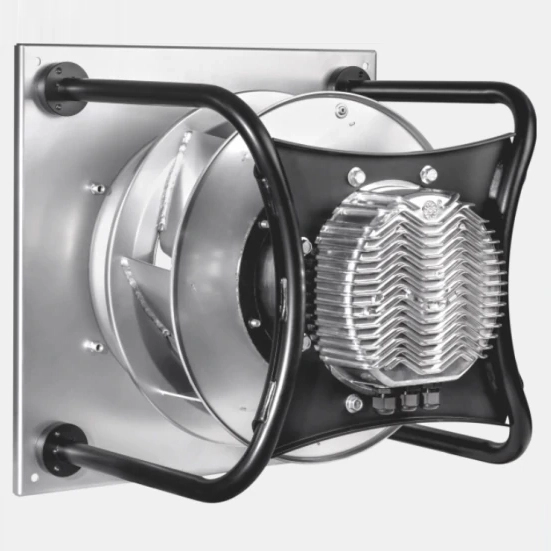
What are the benefits of the versatile mounting options available for EC plug fans?

EC (Electronically Commutated) plug fans offer a variety of mounting options that provide several benefits:

  1. Flexible Installation:
  • EC plug fans can be mounted in various orientations, plug fan ec such as wall-mounted, ceiling-mounted, or inline configurations.
  • This flexibility allows the fans to be installed in a wide range of applications and spaces, accommodating different layout requirements.

2. Space-Saving Design:

    • The compact and modular design of EC plug fans enables easy integration into confined spaces, helping optimize available space.
    • The versatile mounting options make it possible to install the fans in tight, hard-to-reach areas or locations with limited clearance.

    3. Easy Maintenance and Accessibility:

      • With the ability to mount the fans in accessible locations, maintenance and servicing become more convenient.
      • The removable components, such as the motor and impeller, can be easily accessed for cleaning, inspection, or replacement, minimizing downtime.

      4. Customizable Airflow Direction:

        • Depending on the mounting orientation, the airflow direction of EC plug fans can be adjusted to suit specific application needs.
        • This allows for optimized air circulation and distribution, improving the overall efficiency and performance of the HVAC system.

        4. Improved System Integration:

          • The versatile mounting options of EC plug fans enable seamless integration into existing HVAC systems or new installations.
          • This integration flexibility allows for better system design, optimization, and overall system performance.

          5.Reduced Installation Complexity:

            • The modular and compact design of EC plug fans simplifies the installation process, reducing the time and effort required compared to traditional fan systems.
            • This can result in cost savings and faster project completion timelines.

            In summary, the versatile mounting options of EC plug fans provide flexibility, space-saving benefits, ease of maintenance, customizable airflow, improved system integration, and reduced installation complexity, making them a versatile choice for various HVAC applications.
            How does the hydraulic system affect the maneuverability and handling of the truck?

            The hydraulic system plays a crucial role in the maneuverability and handling of a truck.

            Here’s how it affects these aspects:

            1. Power Steering: The hydraulic power steering system provides the driver with the necessary assistance to steer the truck, hand pallet jack 3 ton making it easier to turn the wheels and maneuver the vehicle, especially at low speeds or when the truck is heavily loaded.
            2. Braking: The hydraulic braking system uses fluid pressure to apply the brakes, providing the driver with precise control over the braking force. This allows for better control and maneuverability, especially when having to make sudden stops or navigate tight spaces.
            3. Suspension: The hydraulic suspension system, often found in heavy-duty trucks, uses fluid-filled shock absorbers to provide a smooth ride and better control over the vehicle’s handling. This helps the truck maintain stability and responsiveness, particularly when navigating uneven terrain or making sharp turns.
            4. Transmission: In some trucks, the hydraulic system may also be involved in the operation of the transmission, such as in automatic transmissions. The hydraulic system helps shift gears smoothly and efficiently, contributing to the overall drivability and maneuverability of the vehicle.
            5. Attachments: Hydraulic systems may also be used to power various attachments and accessories on the truck, such as dump beds, cranes, or lift gates. The ability to control these attachments with precision can enhance the truck’s versatility and maneuverability in specific tasks.

            In summary, the hydraulic system in a truck plays a significant role in enhancing the vehicle’s maneuverability and handling by providing power steering, efficient braking, smooth suspension, and control over various truck-mounted systems and attachments.

            What are the common industry standards and regulations for hand pallet trucks?

            Here are some of the common industry standards and regulations for hand pallet trucks:

            1. ISO 3691-5:2014 – This is the International Organization for Standardization (ISO) standard that specifies the safety requirements and verification for hand-operated industrial trucks, including hand pallet trucks.
            2. EN 1757-2:2001 – This is the European standard that specifies the safety requirements and test methods for hand-operated industrial trucks, china hand pallet truck including hand pallet trucks.
            3. ANSI/ITSDF B56.1 – This is the American National Standards Institute (ANSI) standard that covers the safety requirements for low-lift and high-lift trucks, including hand pallet trucks.
            4. OSHA Regulations – In the United States, the Occupational Safety and Health Administration (OSHA) has specific regulations for the use and maintenance of hand pallet trucks under the general industry standards (29 CFR 1910.178).
            5. Regional Regulations – Many countries and regions have their own safety regulations and standards for hand pallet trucks, often based on the international standards mentioned above.

            The key requirements typically cover areas such as:

            • Load capacity and stability
            • Braking systems
            • Steering and handling
            • Ergonomic design
            • Safety features (e.g. load backrest, safety labels)
            • Inspection and maintenance procedures

            Manufacturers of hand pallet trucks must ensure their products comply with the relevant industry standards and regulations for the markets they are sold in. Users of hand pallet trucks should also be trained on the proper and safe operation of these devices.

            What are different types of galvanized fitting for gas?

            Galvanized fittings are commonly used in galvanized fitting for gas systems due to their corrosion-resistant properties.

            Here are some common types of galvanized fittings for gas applications:

            1. Galvanized Steel Pipe Fittings:
            • Elbows (90° and 45°)
            • Tees
            • Couplings
            • Unions
            • Reducers
            • Caps
            • Plugs
            1. Galvanized Malleable Iron Fittings:
            • Elbows (90° and 45°)
            • Tees
            • Couplings
            • Unions
            • Reducers
            • Bushings
            • Caps
            • Plugs
            1. Galvanized Cast Iron Fittings:
            • Elbows (90° and 45°)
            • Tees
            • Couplings
            • Unions
            • Reducers
            • Bushings
            • Caps
            • Plugs

            The choice of galvanized fitting type depends on factors such as the gas line size, pressure, and local building codes and regulations. Galvanized fittings provide protection against corrosion and are commonly used in both natural gas and propane gas piping systems.

            How to join gi pipe fittings to copper pipes?

            Joining galvanized iron gi pipe fittings to copper pipes can be done using a couple different methods:

            1. Using a dielectric union:
            • A dielectric union has threaded ends on one side to connect to the GI fittings, and a compression or soldered end on the other side to connect to the copper pipe.
            • Apply Teflon tape or pipe dope to the threaded ends before screwing in the GI fittings.
            • For the copper side, use a compression fitting if the union has a compression end, or solder the copper pipe directly to the union.
            • The dielectric union acts as an insulator to prevent galvanic corrosion between the dissimilar metals.
            1. Using a transition fitting:
            • A transition fitting has a threaded end on one side for the GI fittings, and a soldered or compression end on the other side for the copper pipe.
            • Apply Teflon tape or pipe dope to the threaded end before screwing in the GI fitting.
            • For the copper side, use a compression fitting if the transition has a compression end, or solder the copper pipe directly to the transition.

            Whichever method you use, it’s important to:

            • Clean the surfaces thoroughly before making the connections.
            • Use the proper sealants (Teflon tape, pipe dope) on the threaded fittings.
            • Tighten the connections securely.
            • Test for leaks after the joint is made.

            Taking these precautions will help ensure a strong, long-lasting connection between the GI pipe fittings and the copper pipes.

            How long does it take to fix a broken sprocket rim?

            The time it takes to fix a broken sprocket rim can vary depending on a few factors:

            1. Accessibility of the sprocket: If the sprocket is easily accessible, the repair process will be faster. If it’s located in a tight or difficult-to-reach area, it may take longer.
            2. Severity of the damage: A small crack or chip may be a quicker fix than a severely bent or broken sprocket.
            3. Availability of replacement parts: If a replacement sprocket is readily available, the repair can be done more quickly. If the part needs to be ordered, it will add time to the process.
            4. Skill level of the mechanic: An experienced mechanic will generally be able to complete the repair faster than someone with less expertise.

            On average, for a moderately damaged sprocket in an accessible location, and with the replacement part available, an experienced mechanic could likely complete the repair in 30 minutes to an hour. However, more complex or harder to reach situations could extend the repair time to 1-2 hours or more. The best way to get a more accurate estimate is to have a mechanic inspect the specific damage and location.

            What is the importance of bulldozer undercarriage parts ?

            The undercarriage of a bulldozer is a critical component that plays a vital role in the machine’s overall performance and longevity.

            The importance of bulldozer undercarriage parts can be summarized as follows:

            1. Mobility and Traction:
            • The undercarriage, which includes the tracks, rollers, and idlers, provides the necessary mobility and traction for the bulldozer to operate effectively in various terrains, such as soft soil, loose gravel, or rocky surfaces.
            • Well-maintained undercarriage parts ensure the bulldozer can navigate challenging environments with ease, improving its productivity and efficiency.
            1. Load Distribution:
            • The undercarriage distributes the weight of the bulldozer evenly across the ground, reducing the risk of sinking or getting stuck in soft or uneven terrain.
            • Proper load distribution helps to minimize ground disturbance and reduces the impact on the worksite, which is especially important in environmentally sensitive areas.
            1. Durability and Wear Resistance:
            • Undercarriage parts, such as the tracks, rollers, and idlers, are subjected to significant wear and tear during operation, as they come into direct contact with the ground.
            • High-quality and well-maintained undercarriage parts are designed to withstand the rigors of heavy-duty use, ensuring the bulldozer’s longevity and reducing the need for frequent and costly repairs.
            1. Stability and Maneuverability:
            • The undercarriage components, including the track frames and suspension systems, contribute to the bulldozer’s overall stability and maneuverability.
            • Properly functioning undercarriage parts allow the operator to maintain control and navigate the machine with precision, improving safety and productivity.
            1. Operator Comfort and Safety:
            • A well-designed and maintained undercarriage can help to reduce the vibrations and shocks felt by the operator, improving comfort and reducing fatigue during long operating sessions.
            • Proper undercarriage maintenance also helps to maintain the bulldozer’s stability and reduce the risk of accidents, enhancing overall safety on the job site.

            Regular inspection, maintenance, and timely replacement of worn-out undercarriage parts are essential to ensure the optimal performance, longevity, and safety of a bulldozer. Investing in high-quality undercarriage components can significantly improve the overall efficiency and cost-effectiveness of a bulldozer’s operations.

            How easy is it to clean and maintain a 30 inch gas oven?

            Cleaning and maintaining a 30-inch gas oven is generally quite straightforward, though it does require some regular attention.

            Here are a few key points about the ease of cleaning and maintaining a gas oven of this size:

            1. Cleaning the interior:
            • The interior of a 30 inch gas oven can usually be cleaned fairly easily using a combination of oven cleaner and some elbow grease. Make sure to follow the manufacturer’s instructions for the appropriate cleaning products and methods.
            • Self-cleaning cycles can also be very helpful for deeper cleans, though these cycles do generate a lot of heat and should be used with caution.
            • Wiping down the interior walls, racks, and door glass on a regular basis (e.g. monthly) can help prevent built-up grime and make full cleanings less intensive.

            2.Maintaining the burners:

              • The gas burners on the stovetop portion typically just require occasional wiping down and checking for any blockages in the ports.
              • Periodically removing the burners and cleaning them thoroughly can help maintain even heating and performance.

              3.Checking for proper operation:

                • Ensure the oven is heating to the set temperatures consistently.
                • Listen and watch for any unusual sounds or behavior from the burners, igniter, or other components.
                • Follow the manufacturer’s recommended maintenance schedule for things like replacing the oven light or cleaning the oven door gasket.

                Overall, a 30-inch gas oven is generally quite easy to clean and maintain, especially if you stay on top of regular light cleanings. With some basic care and attention, you can keep it operating efficiently for many years. As always, consult the owner’s manual for full guidance on the recommended cleaning and maintenance for your specific model.

                How does the warranty and customer support differ for 24 electric wall oven?

                Here are the key details on the warranty and customer support for the 24″ electric wall oven:

                Warranty:

                • The standard manufacturer’s warranty is 1 year parts and labor
                • The warranty covers any defects in materials or workmanship under normal household use
                • The warranty does not cover damage due to abuse, accident, improper installation, or commercial use

                Customer Support:

                • The manufacturer provides a toll-free customer service phone number for warranty claims and general inquiries
                • Customer service representatives are available during standard business hours to assist with troubleshooting, repair requests, and ordering replacement parts
                • The manufacturer also has an online support portal where customers can find product manuals, FAQs, and submit warranty claims
                • Extended warranty coverage may be available for purchase, providing additional years of protection beyond the standard 1 year warranty

                In summary, the warranty provides 1 year of coverage for defects, while the customer support team is available to help with any issues that arise during normal household use of the 24″ electric wall oven. Let me know if you need any other details!

                How can Digger track rolerrs be optimized for different operating conditions and terrains?

                Here are some ways Digger track rollers can be optimized for different operating conditions and terrains:

                1. Adjustable track tension: Allowing the track tension to be easily adjusted can help adapt the rollers to different soil conditions. Looser tension may be better for soft, loose soils, while tighter tension provides more stability on harder terrain.
                2. Roller material and design: Using rollers with different materials (e.g. rubber, polyurethane) and tread patterns can improve traction and flotation on various surfaces. Digger track rolerrs Softer, more flexible rollers may work better in muddy conditions, while harder, more rigid rollers provide better support on rocky ground.
                3. Roller diameter and width: Larger diameter rollers with greater width can distribute the machine’s weight more evenly, preventing sinking in soft soil. Smaller, narrower rollers may be preferable for operating in confined spaces or on sloped terrain.
                4. Hydraulic or pneumatic suspension: Incorporating suspension into the roller assemblies allows them to better conform to uneven ground and absorb impacts, improving operator comfort and reducing wear.
                5. Interchangeable rollers: Designing a system where different roller types can be easily swapped out allows the machine to be quickly reconfigured for the current work site conditions.
                6. Automatic/semi-automatic tensioning: Automating or semi-automating the track tensioning process makes it quicker and easier for operators to optimize the rollers for the terrain.
                7. Integrated sensors: Sensors that monitor roller wear, track tension, and ground pressure can provide data to inform optimal roller configuration and maintenance schedules.

                Careful consideration of these factors during the design process allows Digger track rollers to be tailored for maximum performance and efficiency across a wide range of operating environments.

                Design a site like this with WordPress.com
                Get started