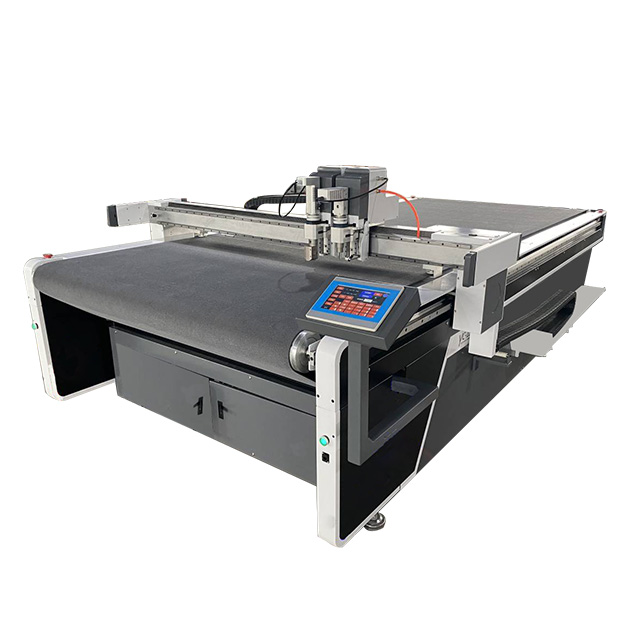
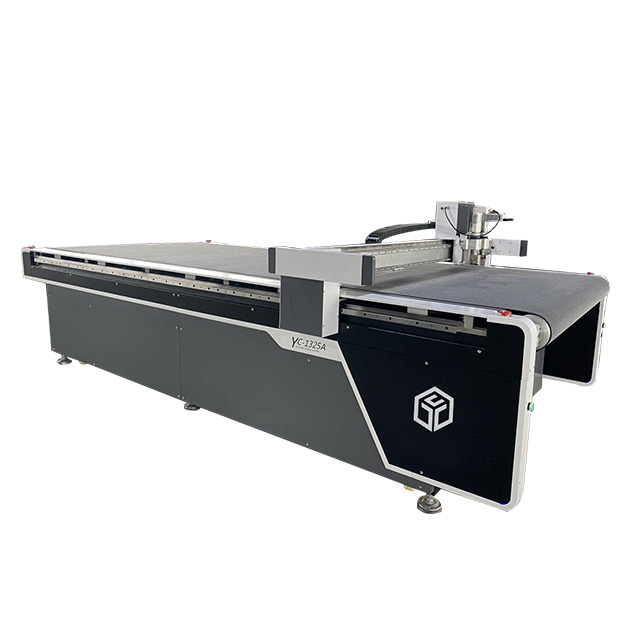
There are several key advantages to using computer-controlled leather cutting machines over manual or traditional cutting methods:
Increased Precision and Consistency:
Computer-controlled leather cutters can achieve far greater cutting precision and consistency compared to manual cutting. The use of computerized controls and cutting patterns ensures each piece is cut exactly to the specified dimensions.
This improved precision helps minimize material waste and ensures a high-quality, uniform final product.
Enhanced Productivity:
Automated computer-controlled leather cutting machines can operate at much higher speeds than manual cutting. This significantly boosts overall production throughput and efficiency.
The machine’s ability to rapidly cut complex patterns without human error also contributes to enhanced productivity.
Improved Material Utilization:
Computer-controlled leather cutters can optimize material utilization by automatically nesting patterns to minimize waste. Advanced nesting algorithms can maximize the number of pieces cut from each hide or leather panel.
This reduces material costs and environmental impact by minimizing leather waste.
Design Flexibility:
With computer-controlled systems, it is much easier to change cutting patterns and designs. Digital cutting patterns can be quickly loaded and adjusted as needed to accommodate changing product requirements.
This flexibility allows manufacturers to rapidly respond to market demands and produce a wider variety of leather goods.
Data Collection and Analysis:
Computer-controlled leather cutters can collect valuable production data, such as material usage, cutting times, and machine utilization. This data can be analyzed to identify optimization opportunities and improve overall operational efficiency.
Reduced Labor Costs:
Automated computer-controlled leather cutting machines require fewer operators compared to manual cutting methods. This helps reduce labor costs and frees up personnel for other value-added tasks.
Improved Ergonomics and Safety:
By taking the physical cutting work away from human operators, computer-controlled leather cutters can significantly improve workplace ergonomics and safety. This reduces the risk of repetitive strain injuries and other potential hazards.
Here are some of the key ways they accommodate different leather characteristics:
Adjustable Cutting Parameters:
Leather cutting machines typically have adjustable cutting parameters, such as blade pressure, speed, and depth, that can be fine-tuned to suit the specific properties of the leather being processed.
This allows the machines to handle softer, more delicate leathers as well as thicker, stiffer hides without compromising the quality of the cut.
Specialized Cutting Blades and Dies:
Leather cutting machines can be equipped with different types of cutting blades, dies, or tools that are optimized for specific leather grades and textures.
For example, sharper blades may be used for cutting thin, fine leathers, while more robust cutting dies can handle thicker, tougher hides.
This customization ensures the leather is cut cleanly and accurately, regardless of its characteristics.
Sensor-Based Thickness Compensation:
Many modern leather cutting machine incorporate sensors that can automatically detect and compensate for variations in leather thickness across the material.
This helps maintain consistent cutting precision and minimize waste, even when processing leather with uneven or inconsistent thickness.
Advanced Feeding and Clamping Mechanisms:
Leather cutting machines often feature sophisticated feeding and clamping systems that can securely hold the leather in place during the cutting process.
These systems can accommodate different leather textures and weights, ensuring the material remains stable and does not slip or shift during cutting.
Programmable Cut Patterns:
Computer-controlled leather cutting machines allow users to create and store custom cutting patterns that can be tailored to specific leather grades and product requirements.
This enables the machine to automatically adjust its cutting parameters and techniques to optimize the cutting process for each leather type.
Quality Monitoring and Feedback:
Some advanced leather cutting machines incorporate sensors and feedback systems that monitor the cutting process and provide real-time data on the quality of the cuts.
This information can be used to make adjustments to the cutting parameters, ensuring consistent and high-quality results, even when processing different leather grades.
By leveraging these specialized features and capabilities, leather cutting machines are able to handle a diverse range of leather grades and qualities, from delicate, lightweight leathers to thick, heavy-duty hides, without compromising the efficiency and quality of the cutting process.
Adult diaper machines play a crucial role in ensuring the durability of the final product. Here’s how:
1. Quality Material Usage
The machines are designed to work with high-quality materials that contribute to the durability of the final product. The choice of materials such as absorbent cores, backsheet films, and elastics can significantly impact the product’s longevity.
2. Precise Assembly
Modern adult diaper machines are equipped with precision assembly systems. These ensure each component of the diaper is accurately positioned and securely attached, contributing to the overall durability of the product.
3. High-Pressure Sealing
High-pressure sealing techniques used in these machines ensure a secure bond between different parts of the adult diaper packaging . T his prevents leakage and enhances the product’s durability.
4. Real-Time Quality Control
Quality control systems, such as vision systems and sensors, monitor the production process in real-time. They can detect any defects or inconsistencies early in the production process, ensuring only durable products are produced.
5. Rigorous Testing
Many adult diaper machines include features for rigorous testing of the final product. These tests check various aspects such as absorbency, fit, and comfort to ensure the product is durable and reliable.
6. Regular Maintenance and Training
Regular maintenance of the machine ensures it operates at peak efficiency, producing high-quality, durable products. Proper training of operators can also contribute to product durability by ensuring the machine is used correctly.
Incontinence products packaging machines employ various technological advancements to manage quality control. Here’s how:
1. Vision Inspection Systems
Vision inspection systems use high-resolution cameras and image processing software to inspect the packaging in real-time. They can detect issues like incorrect labeling, improper sealing, and physical damage, ensuring only quality packages proceed to the next stage.
2. Weight Check Systems
Weight check systems ensure that each package contains the correct number of incontinence products. Any package that deviates from the set weight range is automatically rejected, ensuring consistency in product quantity.
3. Seal Integrity Systems
These systems check the integrity of the package seal. They use pressure or vacuum tests to ensure the package is properly sealed and will protect the product during transport and storage.
4. Barcode and Label Verification
Barcode scanners and label verification systems check that each package has the correct label and barcode. incontinence products packaging machines This ensures the right product information and tracking capability.
5. Metal Detection Systems
Metal detection systems are used to detect any metal contaminants in the package. This is particularly important in ensuring the safety and quality of the product.
6. Automated Rejection Systems
Automated rejection systems work in conjunction with the above systems. If any package fails the quality checks, these systems automatically remove the package from the production line.
The electric hoist commonly makes use of an automated, spring-applied electro-magnetic brake system.
Some crucial information about the braking system of an electric hoist:
Electromagnetic Brake: The hoist uses an electromagnetic brake that is spring-applied and electrically-released. When the power is switched off or the motor stops, hoist manufacturers the spring-loaded brake immediately involves to hold the tons in place. This gives a dependable stopping activity to stop the lots from unintended lowering or dropping. Brake Torque: The brake is developed to offer sufficient torque to hold the rated ability tons of the hoist. The brake torque is matched to the electric hoist for sale power and equipment system to make certain safe and controlled lifting and decreasing operations. Brake Release: The electro-magnetic brake is launched when the motor is stimulated and the hoist is run. This permits the smooth lifting and decreasing of the load by overriding the spring-applied braking force. Fail-Safe Design: In the event of a power failure or emergency, the spring-applied brake will instantly engage to avoid the tons from going down. This sound braking system is a vital security function of the electric hoist. Brake Monitoring: Some electric hoists might include brake use indications or keeping track of systems to inform the operator when the brake lining needs to be inspected or changed. This trustworthy, spring-applied electromagnetic brake system is a typical and important function of electric hoist manufacturers to guarantee protected tons handling and safe operation.
The polypropylene (PP) spunbonded procedure can be leveraged to create sophisticated composite materials in the complying with methods:
Support Layers: PP spunbonded nonwovens can be made use of as reinforcement layers within composite frameworks, providing mechanical toughness and dimensional security. The constant, thermally bound PP fibers can be created to have particular tensile and tear strengths to satisfy the efficiency demands of the compound. Intermediate Layers: PP spunbonded materials can be integrated as intermediate or core layers in sandwich-type composite frameworks, acting as a light-weight, low-density core material. The permeable nature of the spunbonded internet can improve the bond and interlayer bonding in between the composite layers. Surfacing Veils: PP spunbonded nonwovens can be used as appearing veils or encountering layers in composite laminates, supplying a smooth, uniform surface finish and enhancing the appearances of the last composite item. The spunbonded shroud can additionally enhance the surface area features, such as abrasion resistance or UV defense, of the composite product. Hybrid Composites: PP spunbonded materials can be incorporated with other reinforcement fabrics, such as woven or weaved textiles, to produce hybrid composite frameworks. The combination of the spunbonded internet and the textile reinforcement can lead to enhanced mechanical buildings, influence resistance, and total composite efficiency. Thermoplastic Composites: The polycarbonate nature of PP spunbonded nonwovens allows them to be integrated into thermoplastic matrix composites, where they can be co-consolidated with the matrix polymer throughout the manufacturing procedure. This allows the creation of light-weight, pp spunbonded recyclable, and potentially thermoformable composite products. Prepreg Reinforcement: PP spunbonded products can be utilized as strengthening layers in prepreg compounds, where the spunbonded internet is fertilized with a thermosetting or polycarbonate resin. The spunbonded framework can enhance the handling homes, drapability, and dimensional stability of the prepreg composite. Interleaving and Toughening: PP spunbonded nonwovens can be integrated as interleaving layers between composite plies, enhancing the interlaminar crack strength and influence resistance of the general composite framework. By leveraging the convenience of the PP spunbonded process, suppliers can create innovative composite materials with tailored mechanical buildings, improved damage resistance, and enhanced performances, making them ideal for a large range of applications, such as transportation, aerospace, construction, and renewable resource.
The electronic programmability of a multi-layer textile reducing maker provides several essential benefits:
Precision Cutting: The computer-controlled cutting systems in multi-layer textile cutting machines can be programmed to execute specific, repeatable cutting patterns with high accuracy. This digital precision helps guarantee consistent top quality and lessens reducing errors or product waste. Flexibility and Adaptability: The digital programming capabilities permit the reducing machine to be quickly reconfigured and adjusted to manage a wide range of material types, densities, and reducing patterns. This versatility makes it possible for the device to efficiently refine different items or materials without comprehensive hand-operated adjustments. Automated Nesting and Optimization: Multi-layer fabric reducing makers with digital programming can take advantage of advanced software application formulas to automatically generate enhanced nesting patterns. This automatic nesting aids take full advantage of fabric use and decrease product waste, boosting the total performance of the cutting procedure. Smooth Changeovers: The digital shows of the cutting machine allows for quick and smooth transitions between various reducing patterns or material kinds. Operators can just recall pre-saved cutting programs, decreasing the moment and labor required for transitions. Boosted Productivity: The speed and accuracy of the digitally configured reducing process, incorporated with the automated material handling and optimization capabilities, multi layer fabric cutting machine can considerably boost the general efficiency of the multi-layer material cutting operation. Centralized Control and Monitoring: The digital programmability of multi-layer material reducing devices commonly integrates with systematized control and tracking systems. This makes it possible for remote gain access to, performance tracking, and data-driven optimization of the reducing process, bring about enhanced operational efficiency. Reduced Operator Skill Requirements: With the electronic programming and automation capacities, multi-layer material reducing equipments call for less specific driver know-how compared to hand-operated reducing techniques. This can improve the training procedure and make it much easier to maintain constant reducing top quality across various drivers. By leveraging the digital programmability of multi-layer fabric cutting equipments, suppliers can attain higher accuracy, flexibility, productivity, and cost-effectiveness in their textile cutting procedures, inevitably enhancing their total competitiveness in the marketplace.
A knife cutting machine can help reduce the labor-intensive nature of manufacturing in several key means:
Automated Cutting: Knife reducing makers utilize motorized, computer-controlled blades to precisely cut textiles, products, or other substrates according to pre-programmed patterns. This automation removes the requirement for manual, hand-operated cutting, which is a labor-intensive and literally requiring job. Enhanced Cutting Speed: Blade reducing equipments can execute reducing operations much faster than hand-operated hand-cutting methods. The high-speed, computerized cutting capabilities of these devices can dramatically boost production throughput and lower the overall labor needed per unit generated. Regular Cutting Quality: The computerized nature of knife cutting devices makes certain a regularly high degree of cutting precision and precision, minimizing the demand for rework or quality assurance checks that can include in labor requirements. This uniformity aids streamline the production process and minimize labor-intensive quality control steps. Lowered Operator Fatigue: Hand-operated hand-cutting can be physically tiring and lead to operator fatigue with time. Blade cutting equipments remove this physical strain, allowing operators to work much more efficiently and with less downtime due to tiredness. Adaptable Cutting Capabilities: Several blade reducing makers can be set to reduce a selection of products and patterns, offering adaptability in manufacturing. This convenience lowers the demand for specialized cutting equipment or labor for different line of product or materials. Automated Material Handling: Knife cutting machines frequently include computerized material taking care of systems, such as conveyor belts or robot arms, to lots, placement, and safe and secure products for cutting. This automation reduces the manual labor required for product prep work and positioning. Central Cutting Operations: By consolidating reducing operations onto a single, automatic knife cutting machine, business can minimize the variety of specialized cutting workstations and devoted reducing personnel called for. This aids improve the general manufacturing workflow and decrease the labor-intensive nature of the reducing procedure. By leveraging the automated, high-speed, and consistent reducing abilities of blade cutting equipments, producers can dramatically reduce the labor-intensive nature of their production processes, resulting in enhanced performance, efficiency, and cost financial savings.
The extrusion process is developed to make certain a high degree of dimensional accuracy and uniformity in extruded tubing through a number of key aspects:
Die Design:
The die is the vital element that forms the cross-section of the extruded tubing. The die’s geometry and precision are crucial for achieving the wanted dimensions. Innovative computer-aided design (CAD) and computational fluid dynamics (CFD) simulations are used to optimize the die style and lessen variants in the flow of the molten material. The die is manufactured utilizing exact machining and polishing strategies to preserve limited tolerances on the interior measurements.
Melt Circulation Control:
The temperature and pressure of the molten or softened product (known as the “melt”) are thoroughly controlled throughout the extrusion procedure. Constant temperature and pressure help to ensure an uniform and stable flow of the product through the die, minimizing variants in wall surface thickness and total measurements. Advanced monitoring and feedback control systems are utilized to continually monitor and adjust the melt temperature level and stress to keep optimal problems.
Air conditioning and Calibration:
After the material departures the die, it is cooled down to solidify the tubes. The cooling procedure is carefully regulated to prevent bending or distortion of the tubes. Calibration tools, China Extruded Tubing suppliers such as vacuum storage tanks or internal mandrels, are used to maintain the preferred inner and outside measurements of the tubes during the cooling stage. These calibration tools assist to “secure” the dimensions of the tubes as it cools down and strengthens.
Tooling Upkeep and Put On Compensation:
Normal upkeep and monitoring of the extrusion tools, including the die, are essential to keeping dimensional accuracy gradually. Deterioration on the die can trigger progressive modifications in the tubing’s dimensions, so the die is periodically inspected and replaced as required. Some extrusion systems integrate use payment mechanisms to immediately adjust the process parameters to keep the preferred dimensions.
Quality Assurance and Examination:
Thorough quality assurance actions, such as in-line measurement, sampling, and dimensional examination, are executed to make sure the extruded tubing meets the defined resistances. Advanced dimension methods, consisting of laser scanning and ultrasonic testing, can provide real-time feedback on the dimensional accuracy of the tubes. By combining accurate die style, cautious thaw circulation control, reliable cooling and calibration, strenuous tools maintenance, and robust quality control procedures, the extrusion market has the ability to generate extruded tubing with a high degree of dimensional precision and uniformity, meeting the rigorous demands of different industrial and business applications.
The choice of rubber product made use of to make rubber tubing can have a substantial impact on the tubing’s residential or commercial properties and performance.
Here are several of the essential manner ins which the rubber material influences rubber tubing:
Flexibility and Elasticity: Natural rubber has a tendency to have higher adaptability and elasticity contrasted to synthetic rubbers like nitrile or EPDM. Silicone rubber is known for its remarkable versatility and ability to hold up against compression. Temperature Resistance: Neoprene rubber has superb resistance to warmth and can stand up to temperatures as much as around 250 ° F( 121 ° C ). Silicone rubber can endure both low and high temperature levels, making it appropriate for cryogenic and high-heat applications. Nitrile rubber has great resistance to gas, China Rubber tubing suppliers oils, and other hydrocarbon-based liquids, however may have restricted temperature resistance. Chemical Compatibility: Nitrile rubber is highly immune to oils, fuels, and various other petroleum-based chemicals. EPDM (ethylene-propylene-diene monomer) rubber has excellent resistance to a wide range of chemicals, consisting of acids and ozone. Fluoroelastomer (FKM) rubber, such as Viton, supplies phenomenal resistance to severe chemicals, solvents, and fuels. Abrasion Resistance: Natural rubber and neoprene tend to have great abrasion resistance, making them ideal for applications where the tubing may experience physical deterioration. Silicone rubber has reasonably reduced abrasion resistance contrasted to various other rubber products. Electrical Qualities: Rubber products can vary in their electric buildings, with some offering far better insulation or conductive homes. Silicone rubber is understood for its outstanding electrical insulation capacities. Durability and Lifespan: Artificial rubber compounds like nitrile and EPDM normally have longer life-spans and better general resilience contrasted to all-natural rubber. Proper choice of the rubber material can help make certain the tubing’s longevity and performance in particular applications.


 Home
Home 